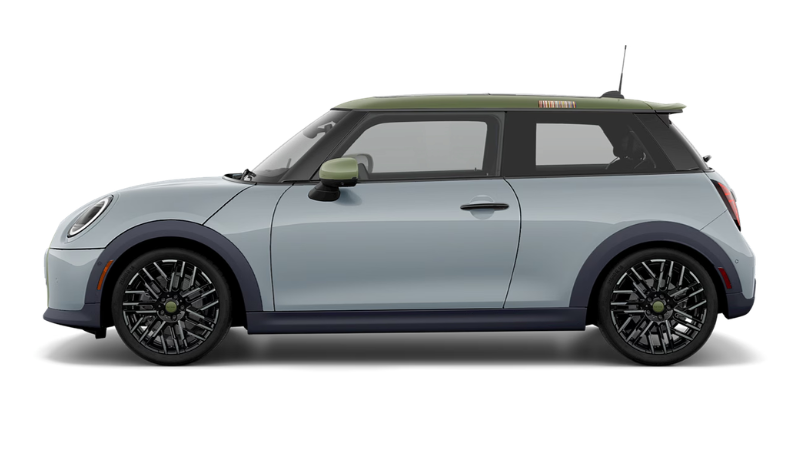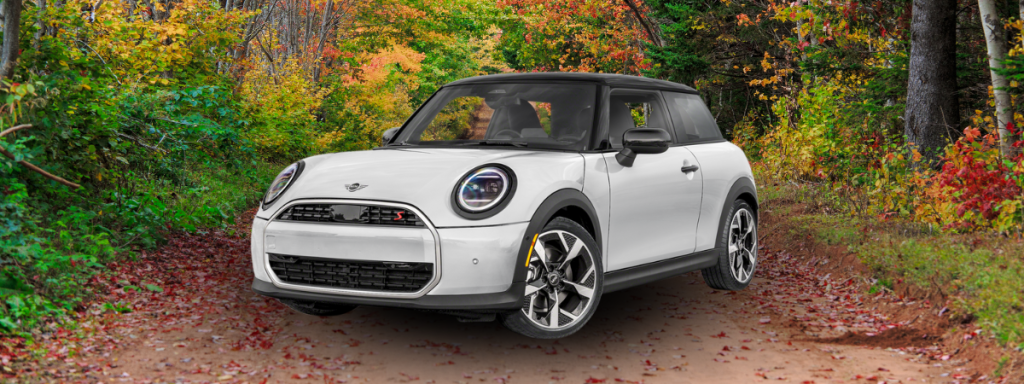


MINI COOPER VS. COOPER S: WHICH ONE MAKES YOU WANT THE KEYS? A MINI can catch your attention before you know anything about its engine. The round headlights, contrasting roof and upright little hatchback shape have a way of making a parking space look more interesting. Then comes the choice: Cooper C or Cooper S? For this 2027 MINI Cooper vs. Cooper S comparison, we are focusing on the new MINI Cooper 2 Door models. The Cooper C brings 161 horsepower and the familiar MINI design, while the Cooper S increases output to 201 horsepower and adds more torque. Both use a seven-speed dual-clutch automatic transmission. The S deserves your attention if acceleration is part of the appeal. The C belongs on your list if the compact shape, expressive cabin and everyday driving experience are what drew you to MINI. START WITH THE MINI YOU ALREADY WANT TO DRIVE. Think about what brought you here. Perhaps you spotted a Cooper with a roof color you loved. Maybe you are ready to trade a larger vehicle for something that feels more personal. Or perhaps you have always wanted a MINI and are finally making room for one in the driveway. Both the Cooper C and Cooper S keep the two-door hatchback format at the center of the experience. You are choosing between two versions of a distinctive small car, rather than moving into a different vehicle category. That makes this a particularly enjoyable comparison. You can fall for the design first, then decide how much engine performance you want behind it. THE COOPER C. PLENTY OF REASONS TO TAKE THE FIRST SET OF KEYS. The 2027 MINI Cooper C 2 Door uses a 2.0-liter turbocharged four-cylinder engine producing 161 horsepower and 184 lb-ft of torque. MINI lists a 0–60 mph time of 7.4 seconds. There is more to its appeal than that figure. The C gives you the MINI shape, hatchback versatility and a cabin with a very different point of view from a conventional small car. If your typical week involves driving to work, meeting friends in Salem and finding a space near your favorite coffee shop, the C deserves consideration on its own terms. You do not have to choose the stronger engine to enjoy a car’s design or look forward to using it. Start here if you are most excited about owning a MINI: the colors, the cabin, the proportions and the feeling of choosing something that suits you. THE COOPER S. MORE URGENCY, SAME TWO-DOOR APPEAL. The 2027 MINI Cooper S 2 Door takes the same basic idea and gives it more muscle. Its 2.0-liter turbocharged four-cylinder produces 201 horsepower and 221 lb-ft of torque. MINI lists a 0–60 mph time of 6.3 seconds. Compared with the C, that is an additional 40 horsepower and 37 lb-ft of torque. Torque is the engine’s twisting force, and it is one reason to pay attention to how the S responds when you ask it to accelerate. If the drive itself is a big part of why you are shopping, put the S near the top of your list. Try it during an ordinary highway merge and see how its response suits you. There is no need to chase a stopwatch to decide which car you enjoy. MINI’s acceleration figures are for comparison; actual results vary with equipment, conditions and driving style. A CABIN THAT GIVES BOTH CARS THEIR OWN SENSE OF OCCASION. Open the door and the circular 9.4-inch OLED display immediately gives the interior a focal point. Below it, the MINI Toggle Bar gathers important controls into a distinctive row. MINI Experience Modes add another layer of personality through display graphics, ambient lighting and, with the appropriate equipment, dashboard projections. Explore the modes while parked and see which atmosphere you would choose for your morning drive. The cabin also makes room for the familiar parts of your day. Wireless Apple CarPlay® and Android Auto™ compatibility let you bring supported phone apps along without a cable connection. This is an important part of the Cooper C vs. Cooper S decision: much of the MINI appeal is shared. Choose the engine because you want its performance, then choose the equipment that makes the cabin feel right. PICK YOUR PERFORMANCE, THEN PICK YOUR FEATURES. Cooper C and Cooper S identify the engine variants. Signature, Signature Plus and Iconic describe equipment packages. Those are separate decisions. For example, a Cooper C with the features you use most might be more appealing to you than a differently equipped Cooper S. Equally, an S with a simpler specification might suit someone whose main priority is the engine. Compare the actual cars for heated seats, parking assistance, audio equipment and other must-haves. A favorite playlist makes a better audio demonstration than a random radio station. Your own phone makes the connectivity demonstration more useful, too. A car you love driving should also be a car you enjoy spending time in. MAKE IT LOOK LIKE YOURS. MINI’s color and style choices give you another reason to take your time. A contrasting roof can change the whole impression of the car. So can the wheel design, upholstery and cabin trim. MINI offers multiple combinations, with availability depending on variant and package. See the paint outside if possible. Walk around the car, look through the open door and consider the exterior and interior together. A combination that looks subtle on a screen may be the one you keep coming back to in person. Browse new MINI inventory at MINI of Peabody to start identifying the cars you would like to see. Confirm model year, variant and equipment on each listing. THE PRACTICAL SIDE OF PICKING A TWO-DOOR MINI. A weekend bag in the hatch, your work bag up front and a playlist ready to go: for some drivers, that covers most of the week. If your routine is more complicated, give it equal attention. Check rear-seat access, try your usual luggage and think about how frequently you carry passengers. The S changes engine performance; it does not turn the 2 Door into a larger vehicle. For North Shore driving, include the ordinary roads in your assessment. How does the car feel over uneven pavement? Is your seating position comfortable? Can you see clearly when maneuvering? The right MINI should make you smile on the way home as well as on the test-drive route. FREQUENTLY ASKED QUESTIONS. WHAT DOES “COOPER” MEAN IN THIS COMPARISON? MINI Cooper is the model name. Here, “Cooper” refers to the Cooper C 2 Door, compared with the more powerful Cooper S 2 Door. DOES THE S GIVE YOU MORE PASSENGER OR CARGO SPACE? Choosing the S is primarily a performance decision. Compare seating and cargo fit separately rather than expecting the engine upgrade to add room. IS COOPER S THE SAME AS JOHN COOPER WORKS? No. MINI John Cooper Works is a separate performance variant. Styling details or equipment with JCW branding should not be confused with the full JCW model. IS THE COOPER S WORTH CHOOSING? Choose it if the stronger acceleration is something you enjoy and expect to use. If the C delivers the experience you want, focus on finding your preferred color and equipment combination. YOUR NEXT MINI STARTS WITH TWO SETS OF KEYS. The Cooper C offers a compelling way to enjoy MINI’s character. The Cooper S gives drivers another reason to look forward to the next stretch of road. Both deserve more than a decision based on a badge. Contact MINI of Peabody to confirm availability and arrange a comparison of the 2027 Cooper C and Cooper S 2 Door. Find the one you want to drive home. Our team of MINI experts is here to help.

MINI WINTER TIRES FOR THE COOPER AND COUNTRYMAN. A NORTH SHORE GUIDE
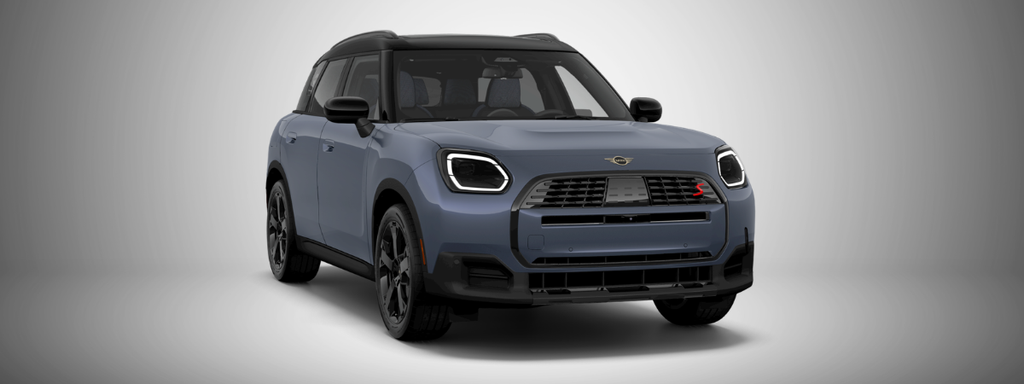
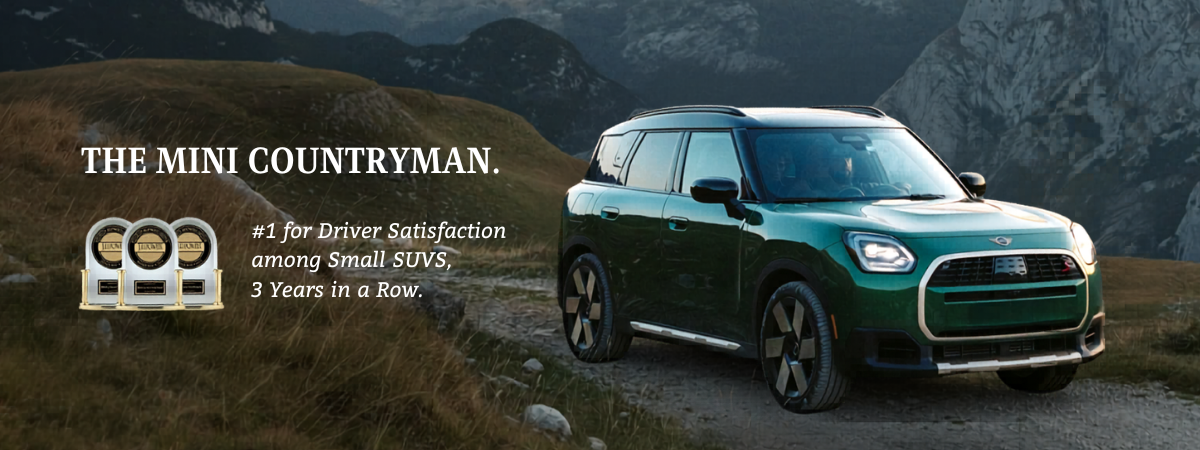
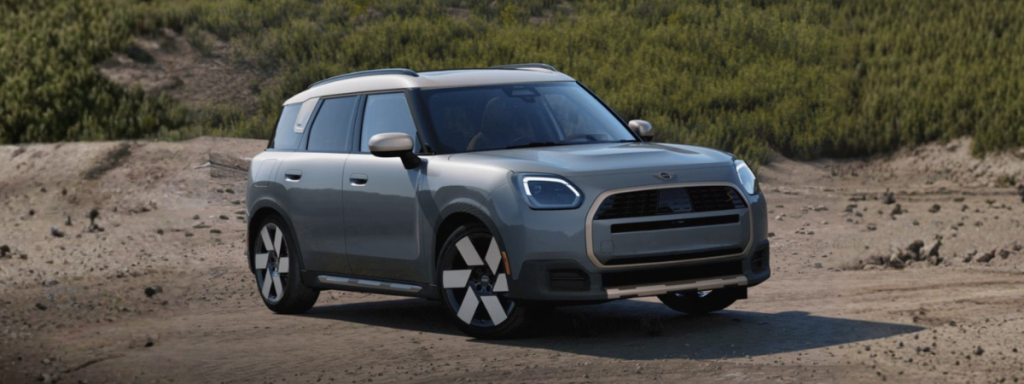
MINI WINTER TIRES FOR THE COOPER AND COUNTRYMAN. MINI winter tires make the strongest case when you regularly drive on snow, ice or roads that haven’t been treated. If most of your driving is on cleared local roads and highways, and you can postpone trips during storms, suitable all-weather tires may cover your needs. Before buying anything, check the type, tread depth, pressure and condition of the tires already on your MINI Cooper or Countryman. For North Shore drivers, that inspection can reveal more than a weather forecast. Your tires might have plenty of tread in the center but worn inner edges. Or the tires that felt fine last winter may now be approaching replacement. This guide from MINI of Peabody starts with those checks, then explains how to choose tires around your everyday route. START BY IDENTIFYING THE TIRES ON YOUR MINI. Read the brand and tire model from the sidewall, then look up that exact product. All-season, all-weather and winter tires offer different capabilities, and a tire’s appearance alone can be misleading. Summer tires are designed for warm conditions. If your MINI has them, plan an appropriate cold-weather replacement before driving in freezing temperatures, snow or ice. Conventional all-season tires cover a broad range of everyday conditions, including some light snow. Their suitability for your winter driving depends on the specific tire, its condition and the weather you encounter. All-weather tires are designed for year-round use and commonly carry the three-peak mountain snowflake symbol. That symbol indicates the tire meets an industry snow-traction requirement. Dedicated winter tires use compounds and tread designs intended for cold-weather traction. They require a seasonal changeover. Check all four tires. A previous replacement may have left your MINI with different tire models or noticeably different wear from one axle to the other. FIVE THINGS TO CHECK BEFORE THE FIRST WINTER COMMUTE. MEASURE TREAD ACROSS EACH TIRE. Use a tread-depth gauge in several main grooves, checking the inner, middle and outer portions of all four tires. Record the lowest readings. NHTSA identifies 2/32 inch as the replacement threshold for worn tread. Winter traction deserves attention earlier. Michelin’s winter-tire guidance recommends beginning to consider replacement around 4/32 inch, depending on condition and intended use. If your tires are already near that measurement in November, consider how much driving you’ll do before spring. Ask for an assessment of their remaining winter usefulness. LOOK FOR UNEVEN WEAR AND DAMAGE. Inspect for cuts, cracking, embedded objects, bulges and tread that looks different across the tire. A bulge or damaged sidewall needs prompt professional attention. Mention vibration or pulling during your inspection. If a tire has worn unevenly, ask what caused it before replacing the set. Inflation, alignment or suspension issues may need attention to help the next tires wear properly. CHECK PRESSURE WHEN THE TIRES ARE COLD. Measure pressure after your MINI has been parked for at least three hours. Follow the vehicle’s tire-pressure label and owner’s manual for your approved setup. Pressure falls as temperatures drop, so a reading from a warm October afternoon may need correcting by November. Check monthly and before longer trips. If a tire repeatedly loses pressure, have the cause investigated. FIND THE MANUFACTURING DATE. The final four digits of the DOT Tire Identification Number indicate the production week and year. For example, “3523” means the tire was manufactured during the 35th week of 2023. Age matters even when a car covers relatively few miles. Have older tires assessed alongside their tread and visible condition, following MINI’s and the tire manufacturer’s replacement guidance. CONFIRM SIZE AND REPAIR EQUIPMENT. Photograph the front and rear tire sidewalls and the vehicle’s tire label. Have those details and your VIN ready when requesting replacements. Also confirm what your MINI carries for a puncture, such as a repair kit or other equipment. If you’re considering changing tire construction, including moving away from run-flat tires, discuss the implications for fitment and roadside mobility first. MATCH YOUR TIRE CHOICE TO YOUR ACTUAL NORTH SHORE ROUTE. A driver leaving Salem for Peabody after roads are treated has different needs from someone starting before dawn from Gloucester or Amesbury. Think about the entire trip. Route 128 or I-95 may account for most of your mileage, but the difficult section could be the street outside your home, a slushy exit ramp or a hill near work. Dedicated winter tires are a stronger choice if your departure time is fixed, you routinely encounter packed snow or your route includes slippery hills. They also deserve consideration if you regularly drive north during winter. All-weather tires may suit your routine if you primarily use treated roads and can wait out severe conditions. Compare the exact tire’s wet braking, snow performance and highway comfort. The mountain snowflake symbol is a useful starting point, while test results help explain differences between products. A manageable winter commute also depends on speed and spacing. Leave additional stopping room and postpone travel when conditions exceed what you can comfortably handle. WHAT COOPER AND COUNTRYMAN OWNERS SHOULD CONSIDER. A MINI Cooper and a MINI Countryman require separate fitment checks. Wheel size, load requirements, brake clearance and tire-pressure monitoring compatibility can vary with the vehicle and equipment. MINI’s 2026 equipment information lists an available 18-inch wheel with all-season tires for certain Countryman S ALL4 configurations. That illustrates why the actual vehicle matters. Two Countrymans can have different wheel and tire equipment. Countryman owners with ALL4 should still give tire condition close attention. All-wheel drive helps distribute power while accelerating. Braking and steering depend on available tire grip. If you’re comparing vehicles in the new MINI inventory at MINI of Peabody, ask which tires are fitted to the specific Cooper or Countryman you’re considering. MINI WINTER TIRE FAQS. DO I NEED FOUR WINTER TIRES ON A MINI COOPER? Use a matching set of four in approved sizes. Fitting winter tires only to the front can leave the rear with less grip, affecting how the car behaves during braking and turns. SHOULD I BUY SEPARATE WHEELS FOR WINTER? A second set allows complete wheel assemblies to be swapped seasonally. Compare the wheel and sensor costs with mounting and balancing tires on your existing wheels, and include storage in the calculation. CAN I REUSE WINTER WHEELS FROM AN OLDER MINI? Have them checked against your current MINI’s VIN and equipment. Matching wheel diameter alone doesn’t establish brake clearance, correct dimensions or suitable tire load capacity. WHEN SHOULD I SCHEDULE A WINTER TIRE CHANGEOVER? Plan ahead of sustained cold and your first expected snow or ice driving. An early commute or planned trip north may justify scheduling earlier than someone with flexible local travel. PREPARE YOUR MINI FOR THE ROADS YOU DRIVE. Start with a measurement and inspection of your current tires. Then choose a setup around your commute, departure time and ability to avoid storms. Contact MINI of Peabody with your VIN and tire information to ask about checking condition and confirming winter fitment. ABOUT MINI OF PEABODY. MINI of Peabody is located at 209 Andover Street in Peabody, Massachusetts. Our MINI dealership serves the North Shore and Greater Boston with new and pre-owned vehicles, MINI service and Genuine MINI Parts.