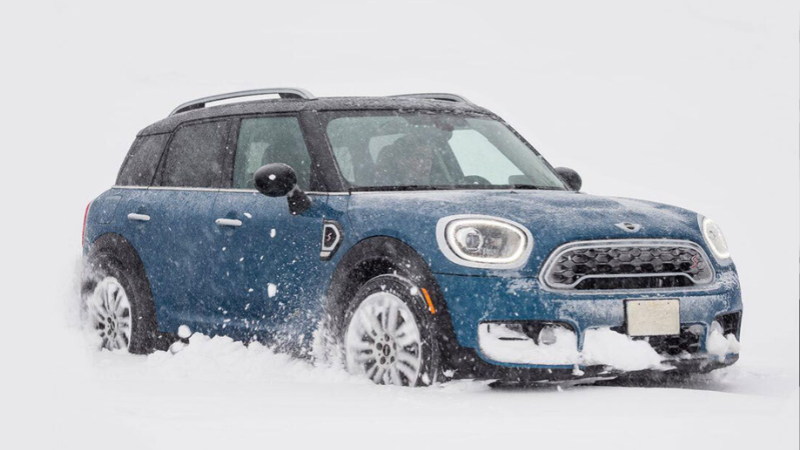

MINI WINTER TIRES FOR THE COOPER AND COUNTRYMAN. MINI winter tires make the strongest case when you regularly drive on snow, ice or roads that haven’t been treated. If most of your driving is on cleared local roads and highways, and you can postpone trips during storms, suitable all-weather tires may cover your needs. Before buying anything, check the type, tread depth, pressure and condition of the tires already on your MINI Cooper or Countryman. For North Shore drivers, that inspection can reveal more than a weather forecast. Your tires might have plenty of tread in the center but worn inner edges. Or the tires that felt fine last winter may now be approaching replacement. This guide from MINI of Peabody starts with those checks, then explains how to choose tires around your everyday route. START BY IDENTIFYING THE TIRES ON YOUR MINI. Read the brand and tire model from the sidewall, then look up that exact product. All-season, all-weather and winter tires offer different capabilities, and a tire’s appearance alone can be misleading. Summer tires are designed for warm conditions. If your MINI has them, plan an appropriate cold-weather replacement before driving in freezing temperatures, snow or ice. Conventional all-season tires cover a broad range of everyday conditions, including some light snow. Their suitability for your winter driving depends on the specific tire, its condition and the weather you encounter. All-weather tires are designed for year-round use and commonly carry the three-peak mountain snowflake symbol. That symbol indicates the tire meets an industry snow-traction requirement. Dedicated winter tires use compounds and tread designs intended for cold-weather traction. They require a seasonal changeover. Check all four tires. A previous replacement may have left your MINI with different tire models or noticeably different wear from one axle to the other. FIVE THINGS TO CHECK BEFORE THE FIRST WINTER COMMUTE. MEASURE TREAD ACROSS EACH TIRE. Use a tread-depth gauge in several main grooves, checking the inner, middle and outer portions of all four tires. Record the lowest readings. NHTSA identifies 2/32 inch as the replacement threshold for worn tread. Winter traction deserves attention earlier. Michelin’s winter-tire guidance recommends beginning to consider replacement around 4/32 inch, depending on condition and intended use. If your tires are already near that measurement in November, consider how much driving you’ll do before spring. Ask for an assessment of their remaining winter usefulness. LOOK FOR UNEVEN WEAR AND DAMAGE. Inspect for cuts, cracking, embedded objects, bulges and tread that looks different across the tire. A bulge or damaged sidewall needs prompt professional attention. Mention vibration or pulling during your inspection. If a tire has worn unevenly, ask what caused it before replacing the set. Inflation, alignment or suspension issues may need attention to help the next tires wear properly. CHECK PRESSURE WHEN THE TIRES ARE COLD. Measure pressure after your MINI has been parked for at least three hours. Follow the vehicle’s tire-pressure label and owner’s manual for your approved setup. Pressure falls as temperatures drop, so a reading from a warm October afternoon may need correcting by November. Check monthly and before longer trips. If a tire repeatedly loses pressure, have the cause investigated. FIND THE MANUFACTURING DATE. The final four digits of the DOT Tire Identification Number indicate the production week and year. For example, “3523” means the tire was manufactured during the 35th week of 2023. Age matters even when a car covers relatively few miles. Have older tires assessed alongside their tread and visible condition, following MINI’s and the tire manufacturer’s replacement guidance. CONFIRM SIZE AND REPAIR EQUIPMENT. Photograph the front and rear tire sidewalls and the vehicle’s tire label. Have those details and your VIN ready when requesting replacements. Also confirm what your MINI carries for a puncture, such as a repair kit or other equipment. If you’re considering changing tire construction, including moving away from run-flat tires, discuss the implications for fitment and roadside mobility first. MATCH YOUR TIRE CHOICE TO YOUR ACTUAL NORTH SHORE ROUTE. A driver leaving Salem for Peabody after roads are treated has different needs from someone starting before dawn from Gloucester or Amesbury. Think about the entire trip. Route 128 or I-95 may account for most of your mileage, but the difficult section could be the street outside your home, a slushy exit ramp or a hill near work. Dedicated winter tires are a stronger choice if your departure time is fixed, you routinely encounter packed snow or your route includes slippery hills. They also deserve consideration if you regularly drive north during winter. All-weather tires may suit your routine if you primarily use treated roads and can wait out severe conditions. Compare the exact tire’s wet braking, snow performance and highway comfort. The mountain snowflake symbol is a useful starting point, while test results help explain differences between products. A manageable winter commute also depends on speed and spacing. Leave additional stopping room and postpone travel when conditions exceed what you can comfortably handle. WHAT COOPER AND COUNTRYMAN OWNERS SHOULD CONSIDER. A MINI Cooper and a MINI Countryman require separate fitment checks. Wheel size, load requirements, brake clearance and tire-pressure monitoring compatibility can vary with the vehicle and equipment. MINI’s 2026 equipment information lists an available 18-inch wheel with all-season tires for certain Countryman S ALL4 configurations. That illustrates why the actual vehicle matters. Two Countrymans can have different wheel and tire equipment. Countryman owners with ALL4 should still give tire condition close attention. All-wheel drive helps distribute power while accelerating. Braking and steering depend on available tire grip. If you’re comparing vehicles in the new MINI inventory at MINI of Peabody, ask which tires are fitted to the specific Cooper or Countryman you’re considering. MINI WINTER TIRE FAQS. DO I NEED FOUR WINTER TIRES ON A MINI COOPER? Use a matching set of four in approved sizes. Fitting winter tires only to the front can leave the rear with less grip, affecting how the car behaves during braking and turns. SHOULD I BUY SEPARATE WHEELS FOR WINTER? A second set allows complete wheel assemblies to be swapped seasonally. Compare the wheel and sensor costs with mounting and balancing tires on your existing wheels, and include storage in the calculation. CAN I REUSE WINTER WHEELS FROM AN OLDER MINI? Have them checked against your current MINI’s VIN and equipment. Matching wheel diameter alone doesn’t establish brake clearance, correct dimensions or suitable tire load capacity. WHEN SHOULD I SCHEDULE A WINTER TIRE CHANGEOVER? Plan ahead of sustained cold and your first expected snow or ice driving. An early commute or planned trip north may justify scheduling earlier than someone with flexible local travel. PREPARE YOUR MINI FOR THE ROADS YOU DRIVE. Start with a measurement and inspection of your current tires. Then choose a setup around your commute, departure time and ability to avoid storms. Contact MINI of Peabody with your VIN and tire information to ask about checking condition and confirming winter fitment. ABOUT MINI OF PEABODY. MINI of Peabody is located at 209 Andover Street in Peabody, Massachusetts. Our MINI dealership serves the North Shore and Greater Boston with new and pre-owned vehicles, MINI service and Genuine MINI Parts.